News and posts

An Opportunity

The Delta Marsh Bird Observatory is looking for a Bander in Charge for the 2026 season

Delta Marsh Bird Observatory (DMBO), is currently located in the Oak Hammock Marsh Wildlife Management Area (OHM WMA) (18km north of Winnipeg). It has been operating since 1992, initially as a fall monitoring site, and then in 1995 as both spring and fall. In 2015 it moved to the OHM WMA and is currently running a fall banding program.

DMBO operates daily during fall migration, following a standardized protocol which includes banding, a daily census (as staffing dictates), continuous observations and daily Estimated Totals. Fall coverage will begin August 1 and run through to the end of September. Large numbers of migrating songbirds (average 3,500/year) have earned DMBO the reputation of being among the busiest monitoring stations on the continent. The Yellow Warbler is the species most often caught at DMBO, with an average of about 500 individuals banded each year. Common Yellowthroats,
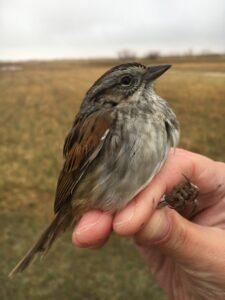
Swamp and Song Sparrows are also banded in large numbers.

Requirements:

  • Must hold a Canadian master banding permit; or Canadian sub-permit; or are eligible for a subpermit under Delta Marsh Bird Observatory’s station permit. When applying please list the qualifications that are listed on your permit (for example: use mist nets, band passerines, band raptors, band hummingbirds, etc.).
  • Good knowledge of birds of Canada (adult and juvenile) by both sight and sound.
  • Knowledge of molt and how to take measurements
  • Ability to work with others – banders and volunteers of all skill levels and ages.
  • Willingness to share knowledge with others.
  • Qualified to live and work in Canada.

Duties would include:

  • Clear and maintain eight (8) spring and fall mist net sites at Oak Hammock Marsh.
  • Conduct mist netting and banding operations, five (5) days per week and collect pertinent
  • banding data on each bird captured.
  • Co-ordinate and supervise assistant and volunteer banders.
  • Enter banding data and backup all data daily.
  • Complete “Daily estimated total” sheets daily.
  • Enter all “Daily estimated total” sheets daily.
  • Submit all data to the Board of Directors.
  • Write a summary account of the banding season and submit to the Board of Directors.

Renumeration:

  • Wages are paid monthly at a rate of $700 to $770 per week depending on your experience.
  • Accommodations and transportation to site are not provided.

Please email resume before May 1, 2026 to:
Delta Marsh Bird Observatory
Attn: Paula Grieef
grieef@dmbo.ca

Click here for a pdf of the job notice

Passing of Dr. Keith A. Hobson

We are so saddened by the recent passing of our Founder and Executive Board Member, Dr. Keith A. Hobson.


In 1992 Keith set out to duplicate a songbird monitoring project originally from 1982-1984 to observe possible population changes that had occurred over the previous decade. He also had a secondary plan in mind, “In addition, it was my ambition to use this study as a springboard for a permanent migration monitoring station at Delta Marsh.”


The dune-ridge forest between Lake Manitoba and Delta Marsh acted as a funnel for migrating songbirds which made the habitat a great place to observe and collect large amounts of data on migration, population dynamics, and individual species. In 1995 Delta Marsh Bird Observatory was created and would go on to be part of the Canadian Migration Monitoring Network and operate until about 2010. After the floods, habitat destruction, and closure of the Delta Marsh Field Station, the banding station was resurrected at Oak Hammock Marsh in 2011. Keith had been involved and an Executive Board Member since its beginning. Without his dedication, support, and enthusiasm we would not exist.

Thank you Keith!

For more on Keith’s amazing career, check this link.


Spring into Fall

My apologies for neglecting to inform you of our spring season sooner!

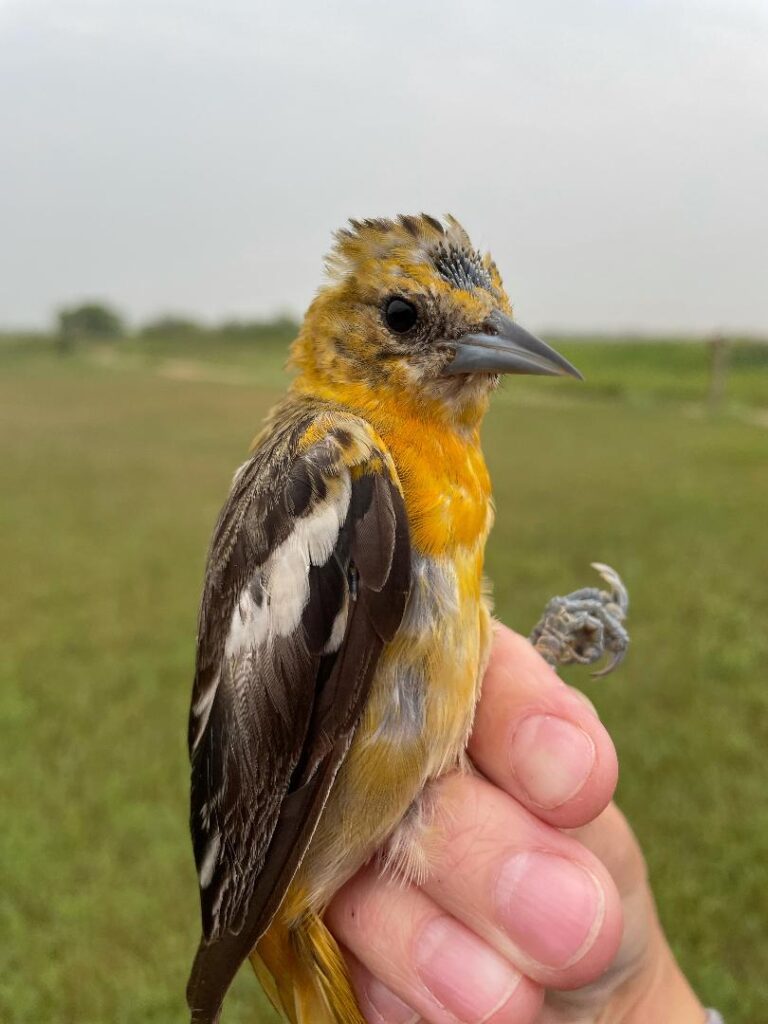
Baltimore Oriole

It was quite a different time for our spring banding season this year. We were able to accommodate 2 volunteers a day for the start of the season but then Health restrictions prevented that for the last 2 weeks. This year we started spring banding a little later than usual. The first two weeks of May are usually pretty dull and not very productive when it comes to mist netting, so we decided to push it back.

The major highlight for spring was catching a Female Black-billed Magpie! Normally larger birds don’t get caught in the nets, they’re able to get themselves out. But we quickly realized the reason we caught her. The pair had a nest directly beside one of our nets. Once we noticed that we did not open that net for the rest of the season to avoid disrupting them.

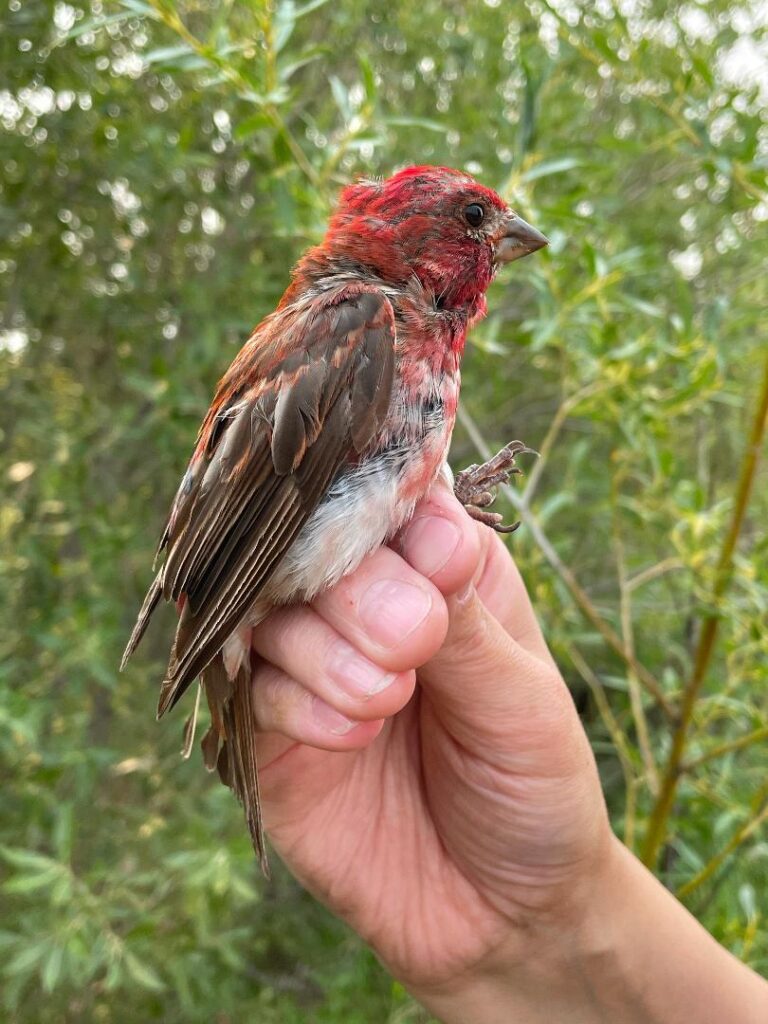
Purple Finch

Of course, another highlight of Spring banding is the breeding plumage. The variety of warbler species was in short supply this year, but we did catch a few that were a treat. The species we spent the most amount of time with was Yellow-headed Blackbirds, we caught 43!

All in all, it was an interesting spring banding season. The last day was June 6th and we ended up with 185 birds caught from 30 different species and 30 recaptures.

We took a month break and started up fall banding July 12. So far, it’s been a whirlwind. We’ve had quite a few moderately busy days with a great variety of species. There have been quite a few little surprises passing through as well. Some of the early birds were Purple Finches, a Warbling Vireo, Ovenbird, Nashville Warblers, and a Baltimore Oriole! We also spotted a Rose-breasted Grosbeak hanging around. We’ve also already caught our first Northern Waterthrush of the year. Eeeek! Fall is here!! It’s pretty hard to believe the seasons are already changing with the temperatures we have been experiencing. We’ve had to end early almost every day of banding due to the heat. One morning it was 25 degrees at 6 a.m. Soon though we will be missing the heat. Best to enjoy it while it lasts.

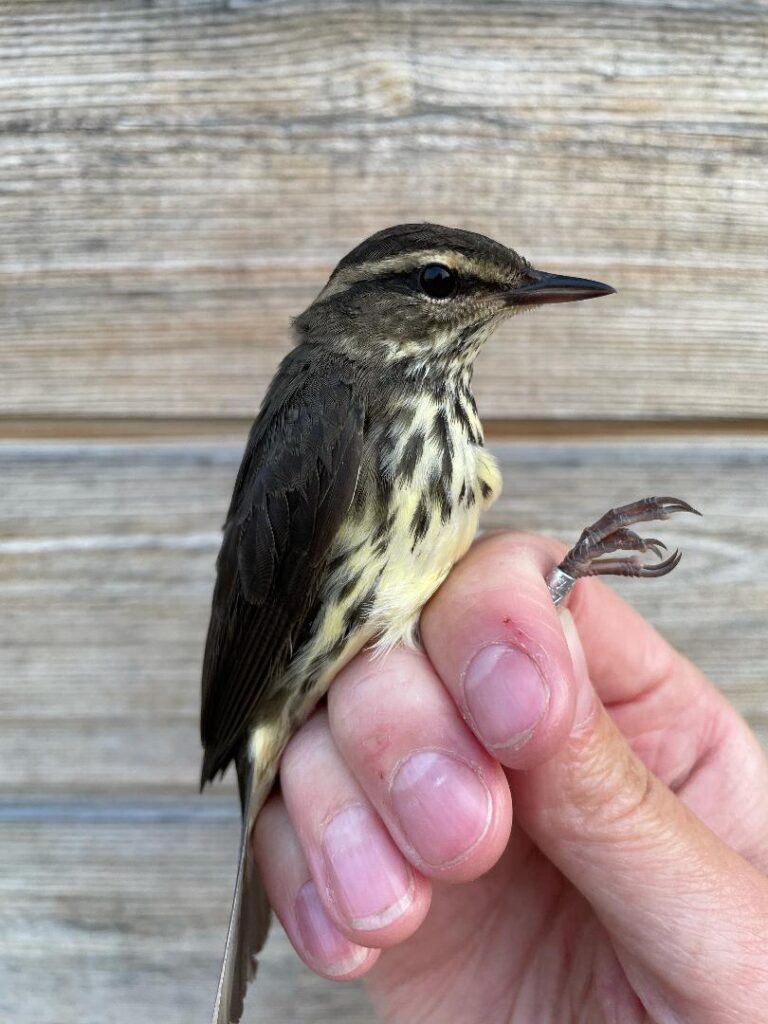
Northern Waterthrush

Now that it’s fall, we’ve rescheduled our Great Canadian Birdathon birding day. With restrictions easing we can gather as a group and set out to find as many species as we can. We will be birding on August 14th. We are hoping to raise enough funds to support a spring banding season next year and to help Birds Canada help birds! Please consider making a donation (we’re not too far away from reaching our goal :D), joining our team, joining a team, or birding individually to support bird research and conservation across Canada. Thanks so much for your support. Check out our team page: https://www.canadahelps.org/me/6GgTDtJ.

I’ll report back with some more great catches soon!

Meredith

An awesome event!

Yesterday’s Birdathon event was awesome!

We had birders in three provinces! Manitoba, Saskatchewan, and Ontario.

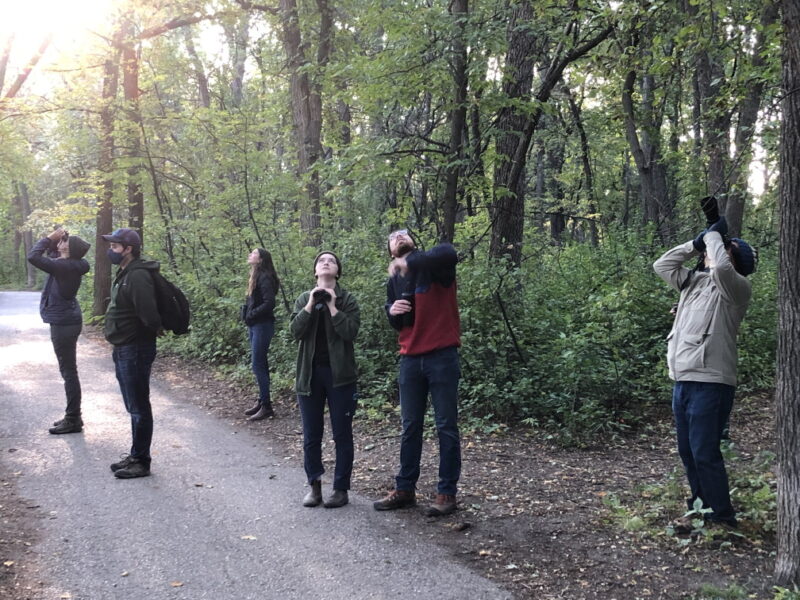
We finished with 101 species seen, and a good time was had by all! Check out the list (and some images) below.

Although we’ve already gone birding, the Birdathon fundraising continues until the end of the year so if you haven’t got your donation in yet, there’s still time!

The Bird-a-thon is the only fund-raising event we undertake, so if you are interested in donating, you can find our Bird-a-thon page at: https://www.canadahelps.org/en/charities/bird-studies-canada/p2p/birdathon20/team/delta-marsh-wrens/. We will be accepting donations until December 31st. and we do issue tax receipts.

Thank you so much to everyone who has donated so far, we truly appreciate it, and thank you to our wonderful birders!

— Meredith Stoesz

List of species seen Sept. 12, 2020 Birdathon:

Snow Goose
Greater White-fronted Goose
Cackling Goose
Canada Goose Trumpeter Swan
Pied-billed Grebe
Red-necked Grebe Wood Duck
Mallard
American Black Duck
Northern Pintail Canvasback
Northern Shoveler Green-winged Teal Blue-winged Teal Gadwall
Bufflehead
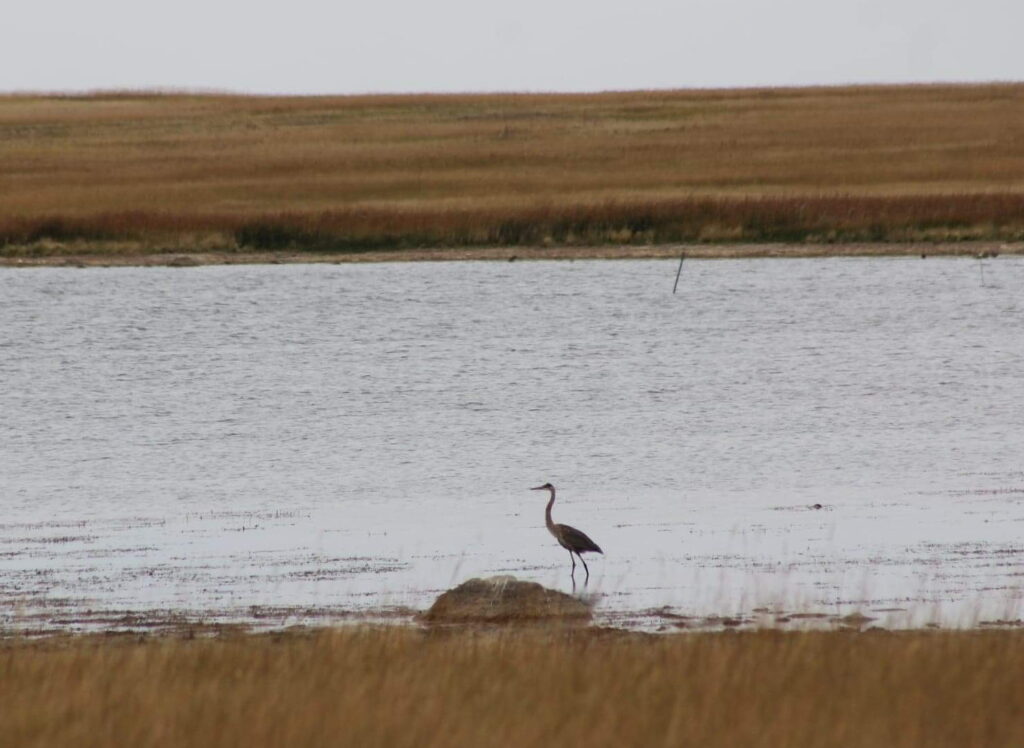
Great Blue Heron American Avocet Black-bellied Plover Hudsonian Godwit Double Crested Cormorant
American White Pelican
Rock Pigeon Mourning Dove
Ruby-throated Hummingbird Greater Yellowlegs
Lesser Yellowlegs
Killdeer
Forster’s Tern
Ring-billed Gull Herring Gull  
Bald Eagle
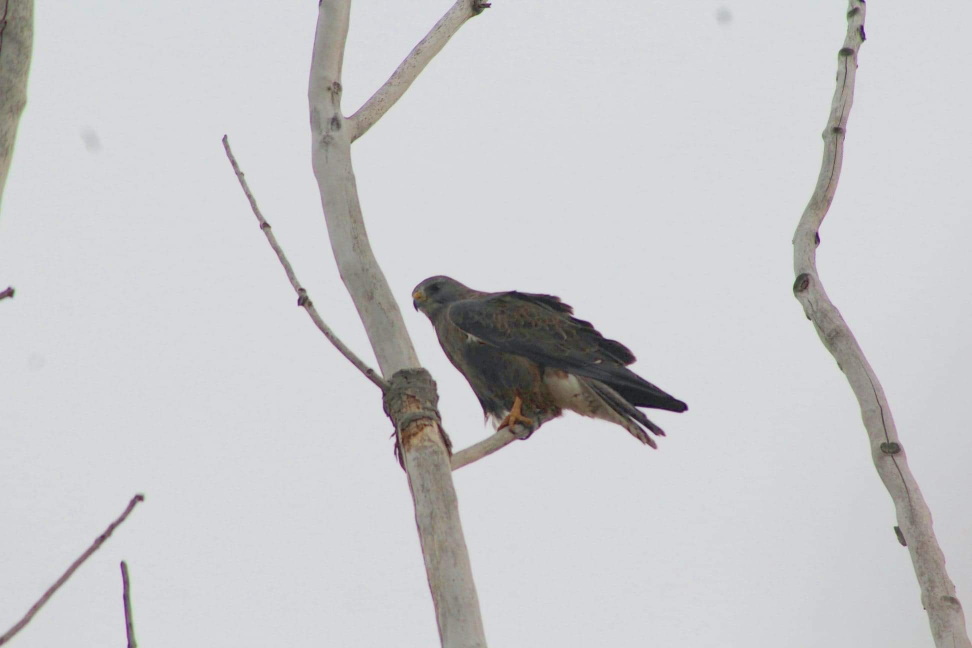
Sharp-shinned Hawk Swainson’s Hawk
American Kestrel
Northern Harrier
Broad-winged Hawk
Red-tailed Hawk
Sandhill Crane
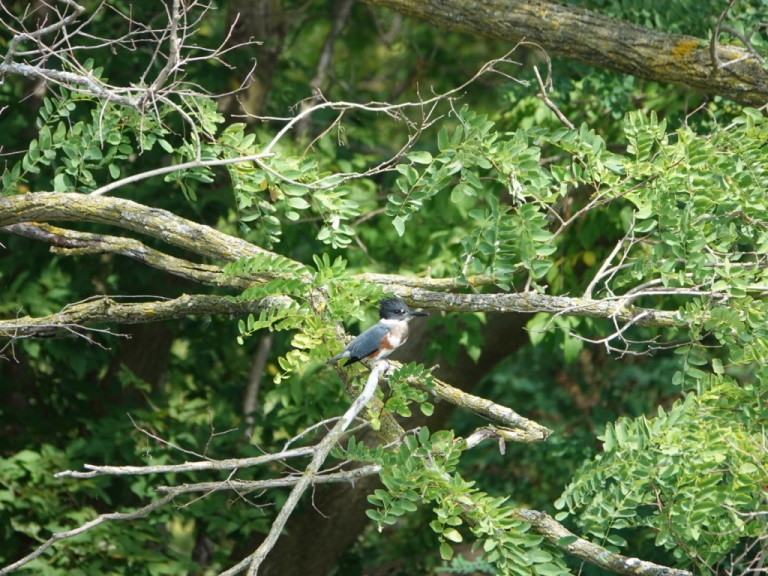
Belted Kingfisher
Downy Woodpecker
Hairy Woodpecker
Pileated Woodpecker Northern Flicker
Yellow-bellied Sapsucker
Least Flycatcher
Eastern Phoebe Warbling Vireo
Red-eyed Vireo European Starling
Blue Jay
Common Raven American Crow
Black-billed Magpie Black-capped Chickadee
Cliff Swallow
Barn Swallow
House Wren
Ruby-crowned Kinglet
Red-breasted Nuthatch
White-breasted Nuthatch
Gray Catbird
American Robin
Gray-cheeked Thrush Swainson’s Thrush American Robin
Cedar Waxwing
Pine Siskin
American Goldfinch
Purple Finch
Song Sparrow
Chipping Sparrow
Clay-colored Sparrow
Savannah Sparrow
Swamp Sparrow
White-throated Sparrow
White-crowned Sparrow
Dark-eyed Junco
Baltimore Oriole
Ovenbird
Northern Waterthrush
Black-and-white Warbler
Tennessee Warbler
Orange-crowned Warbler
Black-throated Green Warbler
Nashville Warbler
Palm Warbler
Yellow Warbler
Common Yellowthroat
American Redstart
Magnolia Warbler
Chestnut-sided Warbler
Blackpoll Warbler
Yellow-rumped Warbler
Wilson’s Warbler
Northern Cardinal
Yellow-headed Blackbird
Western Meadowlark Brewer’s Blackbird House Sparrow    

Spring to Fall

It’s been a busy summer! Spring banding finished up on June 26th with a total of 260 birds caught, 68 re-captures from 37 different species. As you know, this season has been quite different due to the pandemic. We had one volunteer for the entire Spring season and had a few extra protocols to follow.

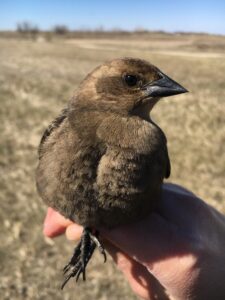
Migration did eventually pick up. Highlights included an Orchard Oriole, Blackpoll Warbler, Magnolia Warbler, Chestnut-sided Warbler, and American Redstart. Our most numerous bird caught this spring was the Red-winged Blackbirds at 34! They’re a handful!

Fall Banding started up again on July 13th and each day has been busier than the last! Our volunteer situation has changed and we welcome a different volunteer every day to act as scribe for the Bander-in-Charge.  Hopefully we can welcome more volunteers next spring. We know it’s been a weird and difficult year so far and we want to thank our volunteers for their dedication. It takes a lot of commitment to wake up at 4:00am!

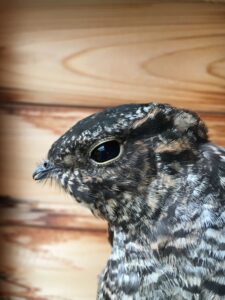
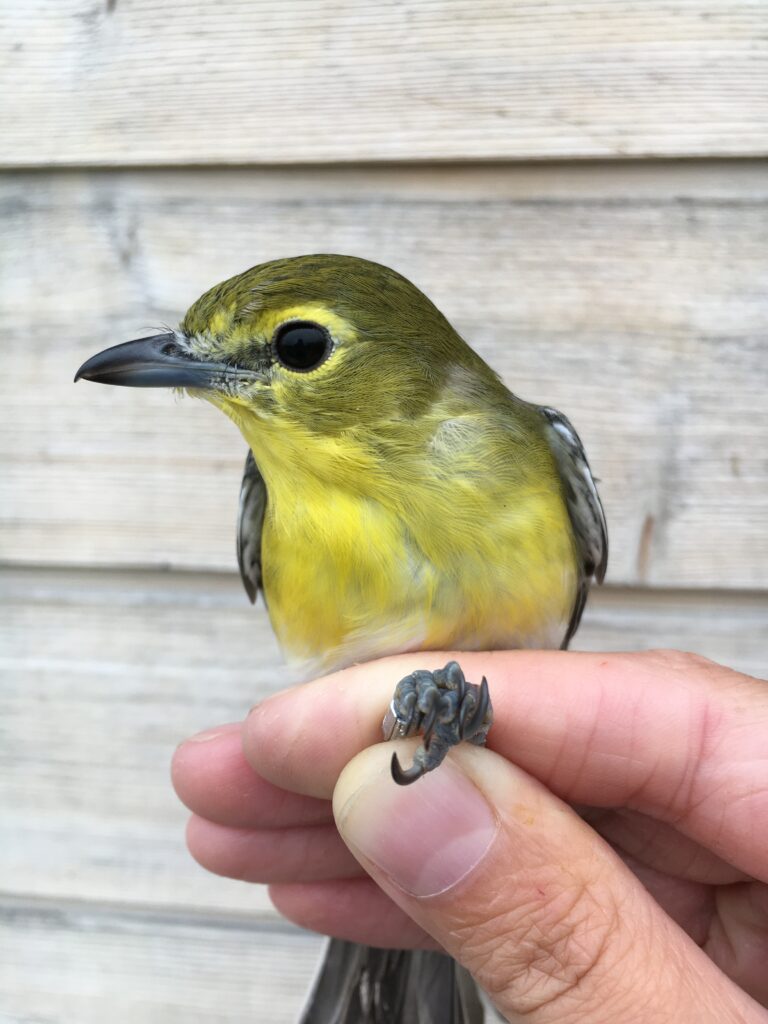
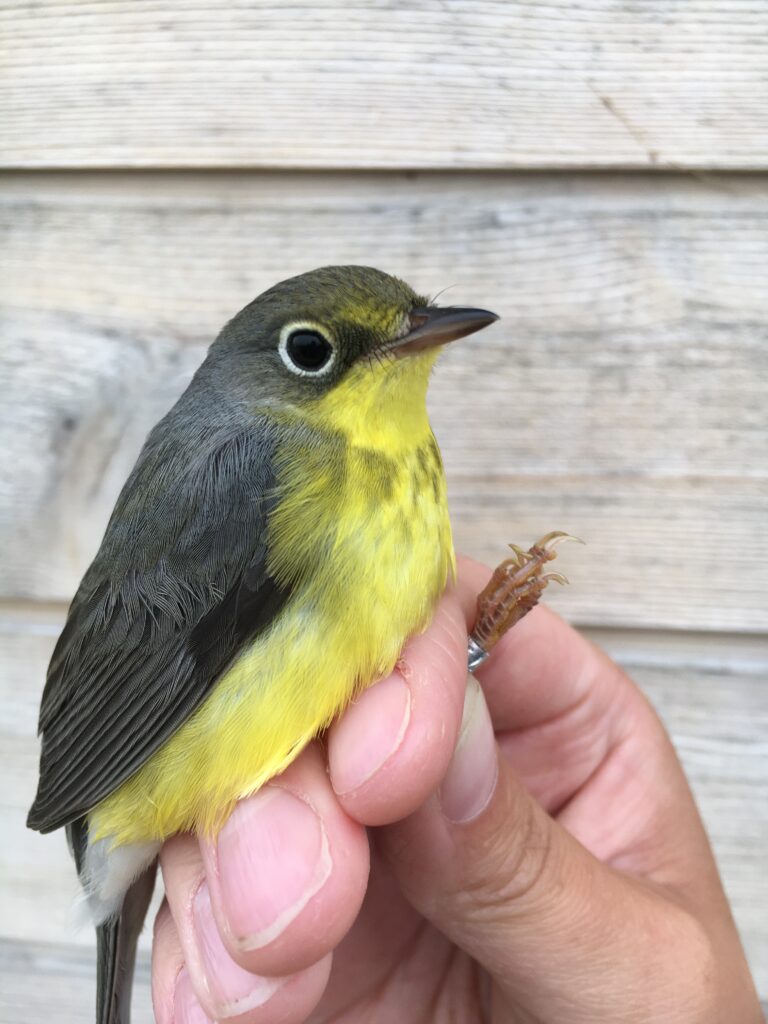
So far we are averaging about 20 birds caught a day and there seems to be an exciting bird every day. Our earliest highlight was back in July when we caught a Swainson’s Thrush! Since then we’ve had more migratory species passing through. Our most recent catches include a Canada Warbler, Common Nighthawk, and Yellow-throated Vireo! The Vireo was a first for the station! Pretty exciting stuff!

Common Nighthawk
Yellow-throated Vireo
Canada Warbler

It’s been very interesting to be at the marsh every day to see and hear the changes happening there. Some things are staying pretty consistent like the movement of Blackbirds and Starlings. Every morning between 6:00 and 6:30 clouds of Blackbirds and murmurations of Starlings descend. It’s a sight to see and hear!

Hopefully the weather will stay calm and warm for the time being except for some nice overnight North winds to send interesting birds our way!

Later on in September our Team, the Delta Marsh Wrens, will be participating in the Great Canadian Bird-a-thon! Normally, this is a springtime operation but because of the pandemic we pushed it to Fall. Our team will be birding on September 12th and trying to see as many species as we can and raise enough money to cover our spring banding season!! Help support Delta Marsh Bird Observatory by joining our team or by making a donation! https://www.canadahelps.org/s/az6hX

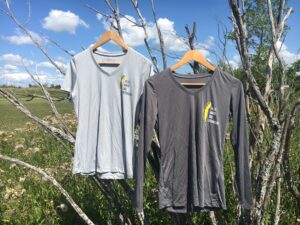
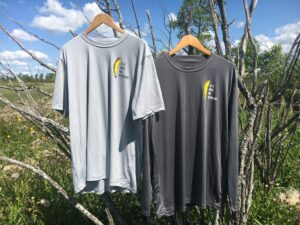
Another great way to show your support is by purchasing a t-shirt! This year we have long sleeve shirts and t-shirts available in men’s and women’s sizes. If you’re interested, send an email to deltamarshbirdobservatory@shaw.ca

Thanks for your ongoing interest and support!!

  • Meredith Stoesz

Spring’s Cold Shoulder

Why not check out Meredith’s four minute video about songbird banding at the Delta Marsh Bird Observatory? It’s on YouTube at https://youtu.be/8iHghr0NQ-c


Well, Spring started out chilly! Most days during the first 2 weeks of May were too cold to open nets until later in the morning. Which resulted in very few birds caught!  Overall it’s been a very slow start to Spring. We have had great diversity of species though and a few re-traps, which is always exciting! We re-trapped a female Brown-headed Cowbird which was originally banded in 2018 as a “After Hatch Year” meaning she is either 4 years old or older!

Of course great habitat is not without it’s predators. We’ve had quite a few weasel sightings in the past month. Walter and Wendy, our usual Short-tailed Weasels paid us a visit, an American Mink, and a Striped Skunk. When we have predators hanging around our nets or in the area, we close nets in order to protect the birds. Bird safety is always our number one priority.

With everything happening in the world right now, it has been quite a different setup. We operate as a 2 person or single person station. Masks are worn to protect the birds and ourselves, we sanitize all of our tools, and of course we practice social distancing. If only the Weasels would participate.

Although, bird captures have been few, there’s still good birding happening at the Marsh. We’ve seen a Baltimore Oriole, Wilson’s Warbler, Hudsonian Godwits, Black Terns, American Bittern, Brown Thrasher, Blue Jay, and Swans galore!

This year we have a new Bander-in-Charge. It’s me! Meredith! I’m very excited to spend the Summer and Fall with the birds and looking forward to when we can welcome more volunteers safely. We have made the decision to open to the public but we are going to wait until July to have volunteers participate and learn. 

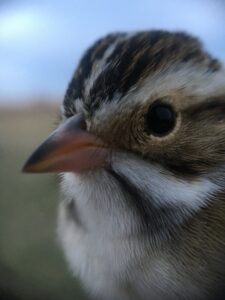
Hopefully, our Spring migration will pick up in the next few days and we can see some brightly colored birds. Clay-colored Sparrows and Swamp Sparrows are great but some color would be appreciated.


photo courtesy Dennis Swayze

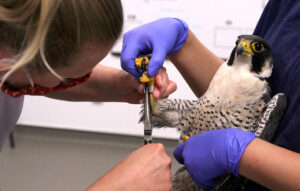
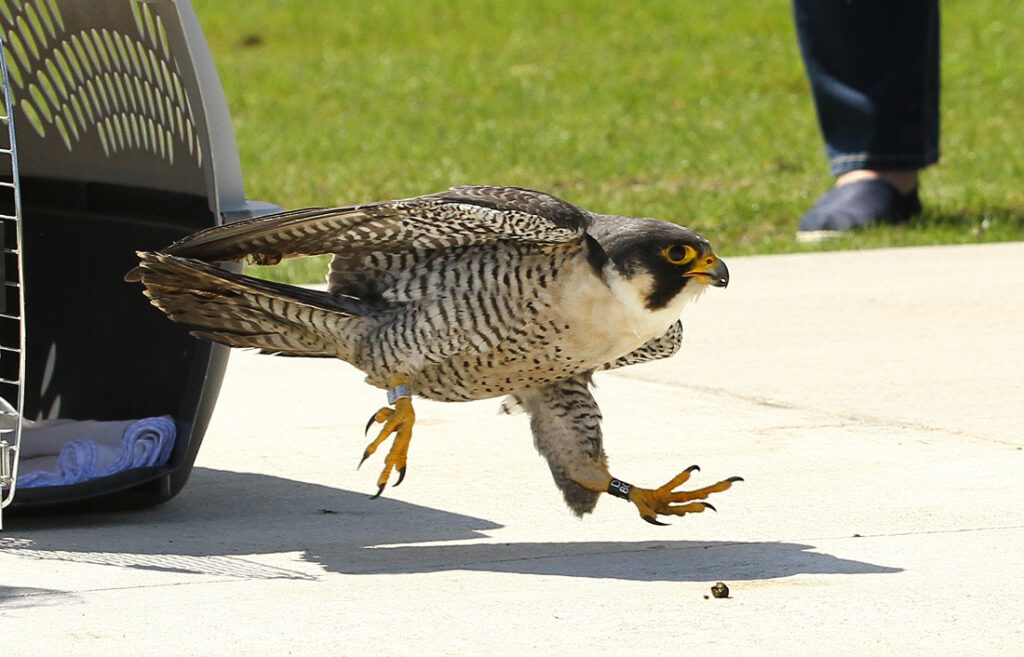
This month we also had the pleasure of banding a male Peregrine Falcon on behalf of the Peregrine Falcon Recovery Project before it was released at Wildlife Haven Rehabilitation Centre.

It was a great experience! Thanks to Wildlife Haven for having us!

photo courtesy Dennis Swayze

See you all in July and thank you so much to our volunteers for understanding!

— Meredith Stoesz

Slow but Steady

This year’s Fall Banding season was slow but steady. We had a number of busy days followed by slower but consistent days. We think we missed a lot of the migrating birds during all those rainy days.

We didn’t beat any major records this year but we did band a couple of new species!

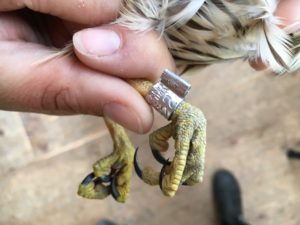
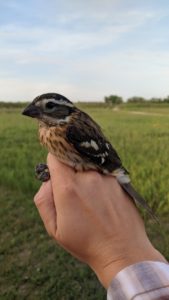
We were able to band our first Merlin! Merlins require a special band called a lock-on band. They’re able to remove regular blunt end bands! Fingers crossed we see it again next year! Our second new species this year was a Rose-breasted Grosbeak and we caught 2 of them! We caught a female and a hatch year male.
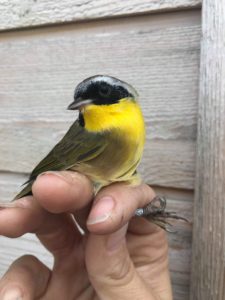
There were a couple of birds that were pretty amazing re-traps. We caught a Yellow Warbler and a Common Yellowthroat that were both at least 6 years old! Not only that, we caught them in the very same nets we originally caught them in! Just goes to show that we have a pretty reliable breeding and stopover site at Oak Hammock Marsh.
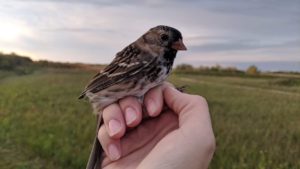
 

Our final bird banded this year was a Harris’s Sparrow. Which brings us to a total of 1352 birds banded and 58 different species!
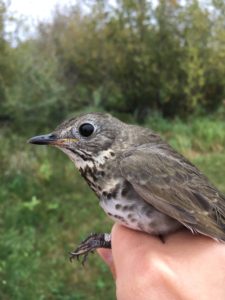

If you’re interested in volunteering or learning more, we have some workshops coming up throughout the Winter.

  • November 23, 2019: Learn to Band Birds Workshop: Ageing through Moult
  • March 7, 2020: Learn to Band Birds Workshop: Working with Pyle
  • April 25 & 26, 2020:  Learn to Band Birds Workshop: Banding Birds

For more information you can check out our website www.dmbo.ca

The Spring banding season starts May 1st, 2020.  See you then!

— Meredith Stoesz

Upcoming workshops

Want to learn more about bird banding?

DMBO will  be conducting  workshops over the coming months. For more details about the content of the workshops, please click the links below.


Ageing Through Moult November 23

Working with Pyle March 7

Banding Birds April 25 & 26

For more information or to register:
Contact Paula at 204-467-3243 or
deltamarshbirdobservatory@shaw.ca


All proceeds from the workshops go to the Delta Marsh Bird Observatory


Fall Season Starts with a bang!

Well the Fall season has started off with a BANG! We have already caught a new species for the station. Not only that, it was our 100th species! We finally got to experience the bite of a Rose-breasted Grosbeak. It didn’t take long to realize that we don’t want to be bit by that bird again.  We caught not one, but two!  An adult female and a hatch year male.
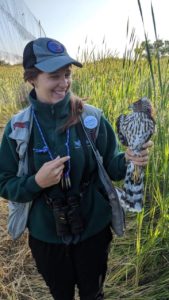
Our next exciting catch was another biter. We caught a hatch year Cooper’s Hawk. We weren’t able to band this bird but it was a pleasure to see this creature up close and personal.

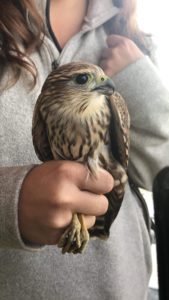
Just recently we caught a Merlin. We have caught them before but this one was special because we got to band it! In the past we have not banded Merlins because they require lock-on bands. Lucky for us, one of our volunteers had some experience with lock-ons and has now taught us how to put them on! The Merlin we caught was a hatch year female.


Other highlights include 2 Yellow-bellied Flycatchers, Downy Woodpecker, House Wren, Ovenbird, and Purple Finch.

Overall the first month of banding has been exciting and the weather has mostly been agreeable. Warblers from up North have slowly started to move through the marsh and soon the variety will be excellent. For now we won’t rush migration and enjoy all of our Yellow Warblers, Common Yellowthroats, and Swamp Sparrows!

Some of our visitors:


— Meredith Stoesz