Did you know that Delta Marsh Bird Observatory is involved in a few other banding projects in Manitoba!?
We work with The Manitoba Peregrine Recovery Project, The Manitoba Burrowing Owl Recovery Project and Tall Grass Prairie MAPS Banding near Tolstoi.
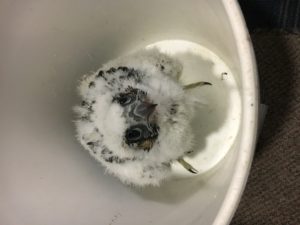
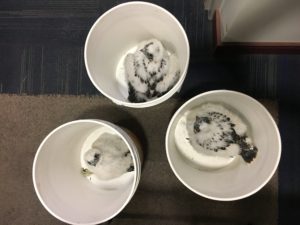 A few weeks ago we got to take part in Peregrine Falcon Banding in Winnipeg. The young birds are banded to monitor their migration and to identify them in future.
We got to witness 3 young Peregrines be banded. It was LOUD. Each chick is given two bands, one is a colour band with an easily read number and letter on it and the second is a metal band with a 9-digit number on it.
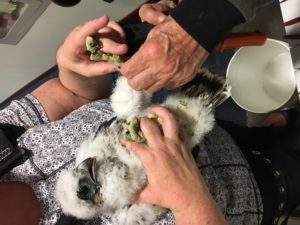
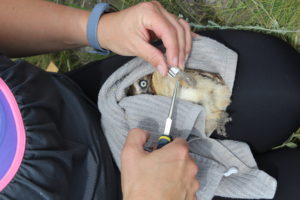
Each bird was banded and then placed back in their nesting platform much to the parent’s relief.
We also did a day trip to visit one of the Burrowing Owl nesting sites. Not only were the owls cool but the birding was amazing! Southwest Manitoba never disappoints. We arrived at the site and were greeted by a Say’s Phoebe and then we heard both Sprague’s Pipit and Chestnut-collared Longspurs. After being onsite for about 20 minutes a Ferruginous Hawk slowly soared over.
26 young owls were banded, they were all 2-4 weeks old. Each one gets a colour band and an aluminum 9-digit band as well. Once banded and weighed they are placed back into their burrows.
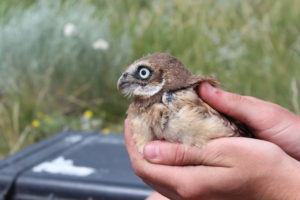
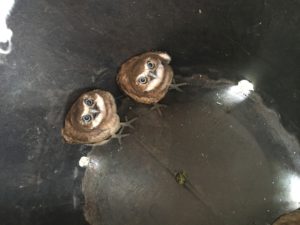
The Manitoba Burrowing Owl recovery project works to reintroduce Burrowing Owls into their historical habitats in Southwestern Manitoba in the hopes that they will return. They create artificial burrows to provide the owls with nesting sites. They have placed about 190 burrows around Southwest Manitoba. They work with the Assiniboine Zoo to overwinter some adults to keep the project going each year.
Each experience was very interesting to see and to participate in. Thanks to each banding project for having us out! Our next visit will be to the Tall Grass Prairie MAPS banding near Tolstoi! We are looking forward to it!
— Meredith Stoesz
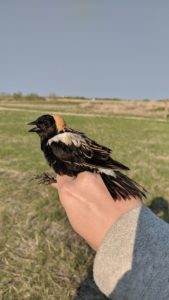
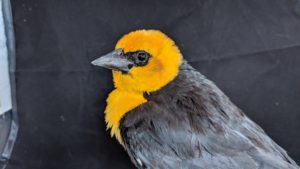
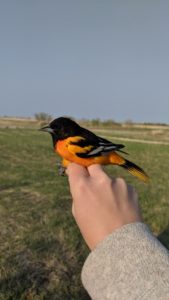
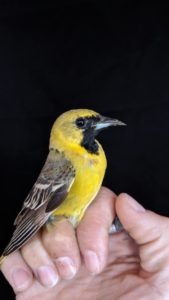
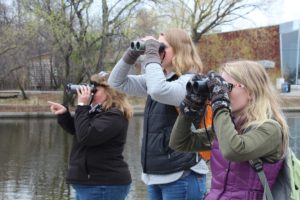 Our Spring banding season started off with Part 2 of our Bird Banding Workshop on April 27th and 28th. We had very poor weather (snow) and only caught a handful of birds. Luckily we were able to do some practicing inside and we all learnt quite a bit!
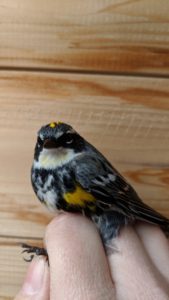 Again, due to poor weather the first few days after the workshop weren’t very fruitful. Our patience with the weather, however, was rewarded with a wave of warblers! Wednesday, May 8th we banded 139 birds in two hours. 85 of those birds were Myrtle Warblers. It was BANANAS!
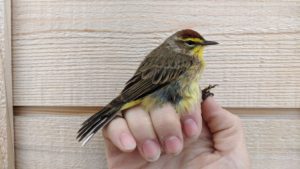 This year we are once again participating in The Great Canadian Birdathon! Our Birdathon day was May 12th and it was absolutely amazing! We have a list of 177 different species from 10 different locations. Two of those locations were in Ontario: Rondeau Provincial Park and Point Pelee. Some highlights included a Blue-headed Vireo, Prothonotary Warbler, Northern-rough Winged Swallow, Upland Sandpiper, Mountain Bluebird, and several other species of warblers, shorebirds, and birds of prey!! Check out our species list below.
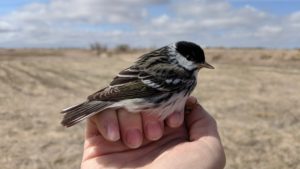 So, thanks to our volunteers the Birdathon birding day was a complete success but we haven’t reached our fundraising goal yet. But don’t worry there is still time to donate! Check out our fundraising page, donate and show your support!!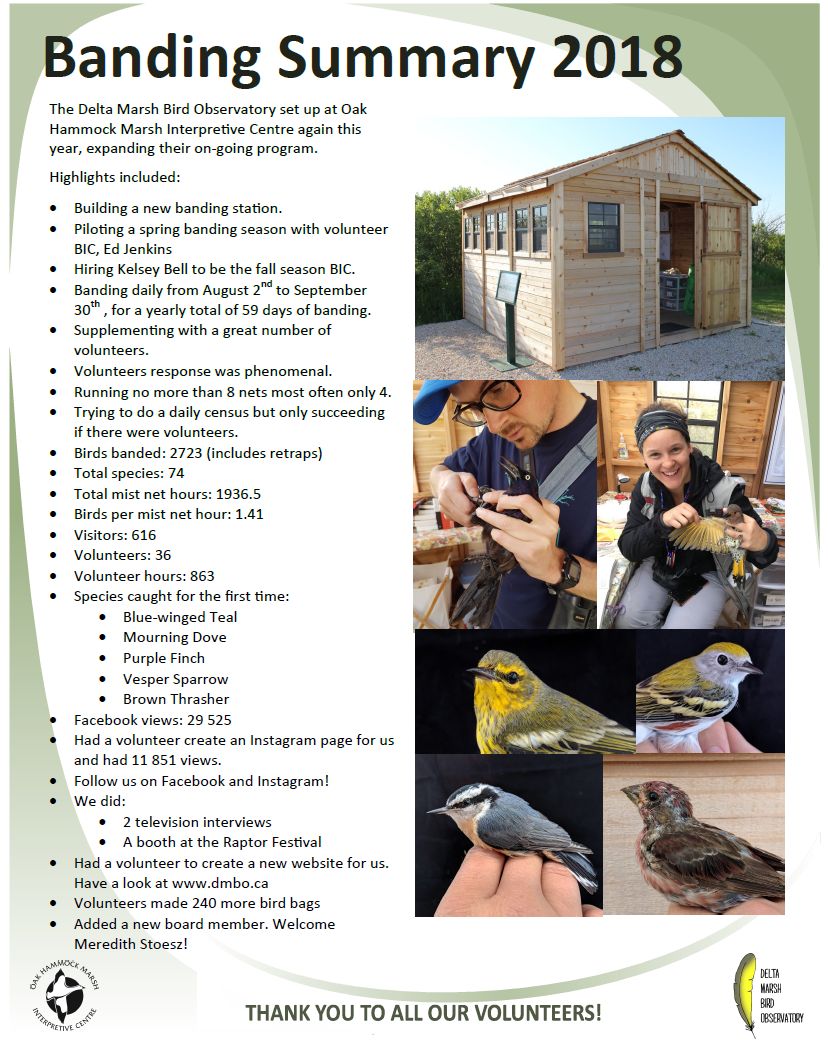
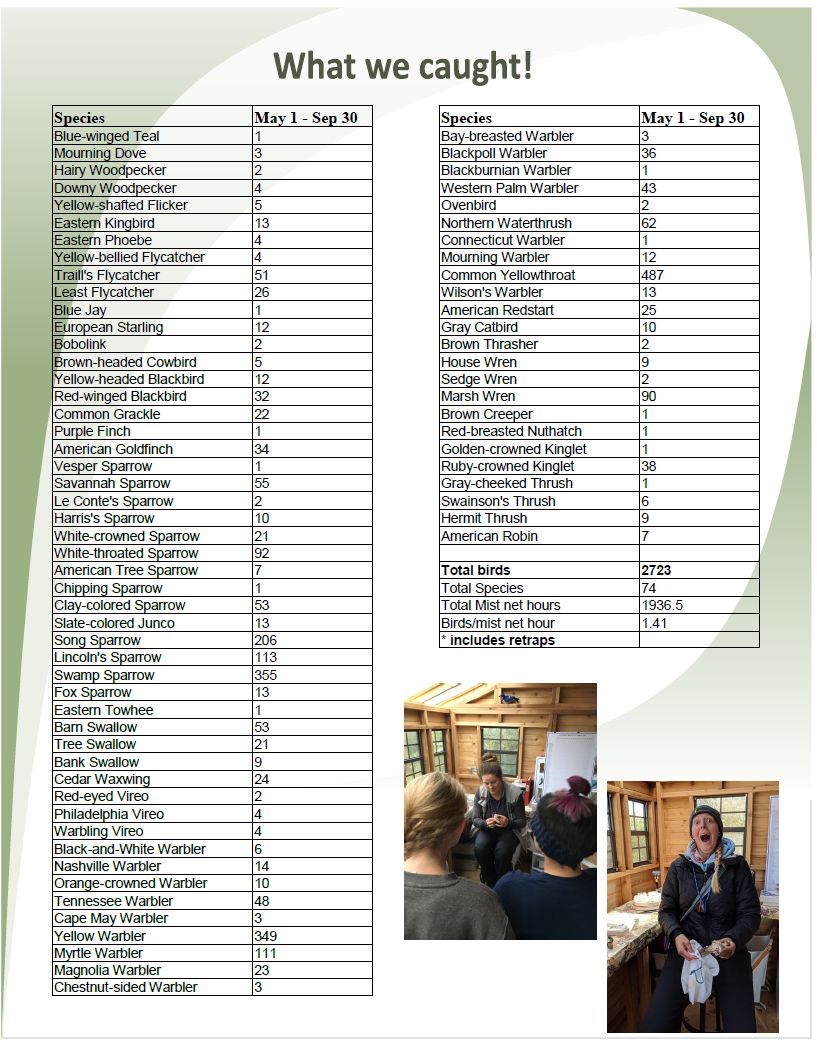
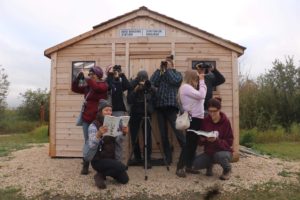 Simply put, this Fall banding season has been epic. From our very first Mourning Dove to our final bird, it has been a complete roller coaster ride. The last two weeks were a bit of a waiting game. We had been waiting for those late arrivals to bring our species total to an even 70. We were banking on Chickadees and Tree Sparrows to help us out but alas the Chickadees evaded us and the Tree Sparrows hadn’t even arrived yet! Luckily for us, we caught some weirdos.
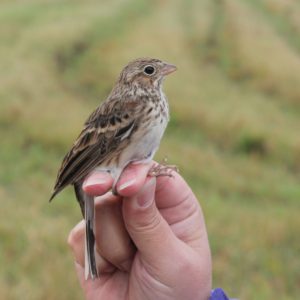 Since our record breaking Cape May Warbler we managed to catch 6 more species including a Blue Jay, Vesper Sparrow, Brown Creeper, Gray-cheeked Thrush, Golden-crowned Kinglet, and Swainson’s Thrush. Bringing our grand total to 71 species!! It’s just nutty!
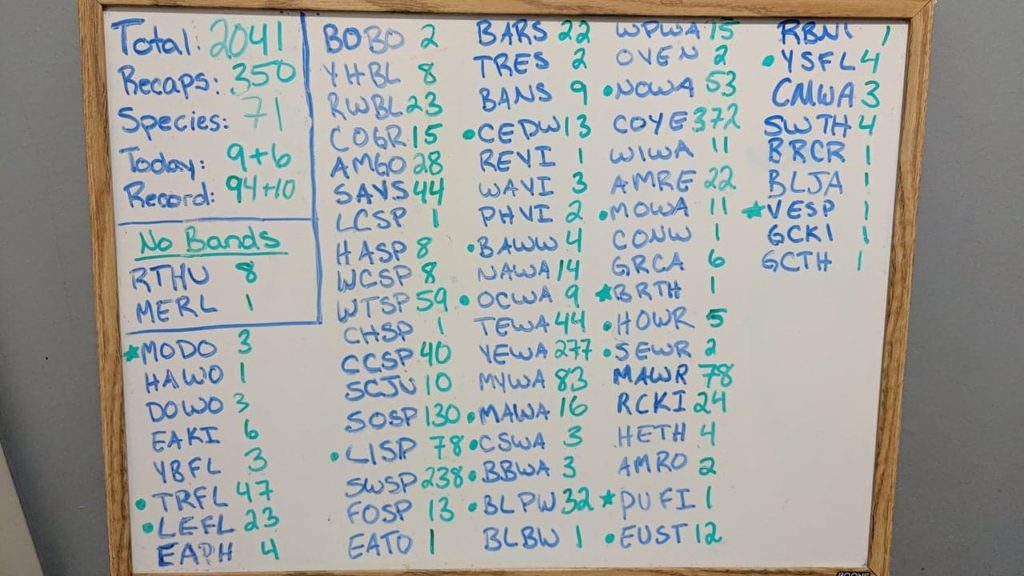 Here is a little recap of our season but be sure to check out our final list and numbers when it’s up on the website. I’ve also included our final whiteboard of the season. See if you can decipher the four letter codes for each bird!
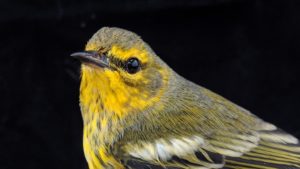 ‘Tis the season! For breaking records that is! Since our last post we have caught more Blackpoll Warblers, Trail’s Flycatchers, and Black-and-White Warblers than in previous years. Not only that, we actually broke the species record! Our 65th species was a lovely adult male Cape May Warbler.
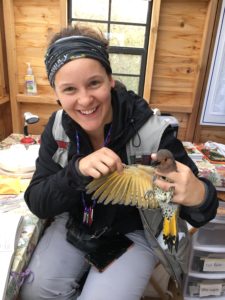 What a treat! One of our more recent moments of excitement came from a Northern Flicker. It’s always so much fun when a heavy weight hits the net! This Flicker in particular was a female and she had plenty to say. We could barely hear each other over her chatter!
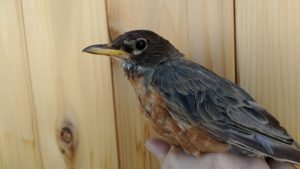 banded in 2016 and she was aged as an ‘after second year’ which means she’s at least 4 years old. Pretty impressive especially with the amount of Merlins and hawks around the marsh lately. It’s also so great to have her return here! Just imagine, she’s probably been back every year since, or we hope so. That just goes to show the quality of habitat we have here at Oak Hammock Marsh. We are all pretty lucky!
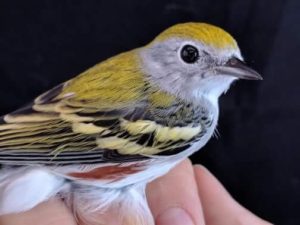 The last two weeks have been phenomenal! Migration has been action packed and there’s been barely a moment to take a breather. Which is great! Our 500
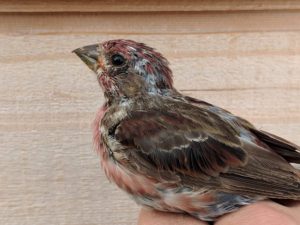 During the last two weeks we caught some rarities for our station. We had our first ever Purple Finch, Brown Thrasher, and Merlin! We have also been lucky enough to catch th
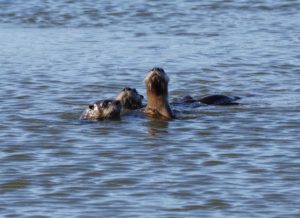 In other news, we’ve had a very curious Short-tailed Weasel hanging around. When there are predators in the area we always make sure that the birds are safe. Therefore we have had to close the nets quite a few times because this Weasel is the most confident Weasel out there! Another cool wildlife sighting lately was River Otters! Clayton, one of our volunteers, was lucky enough to spot them and get some great photos!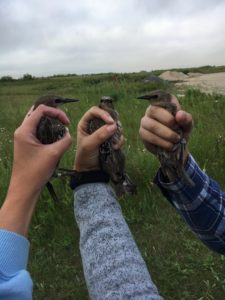
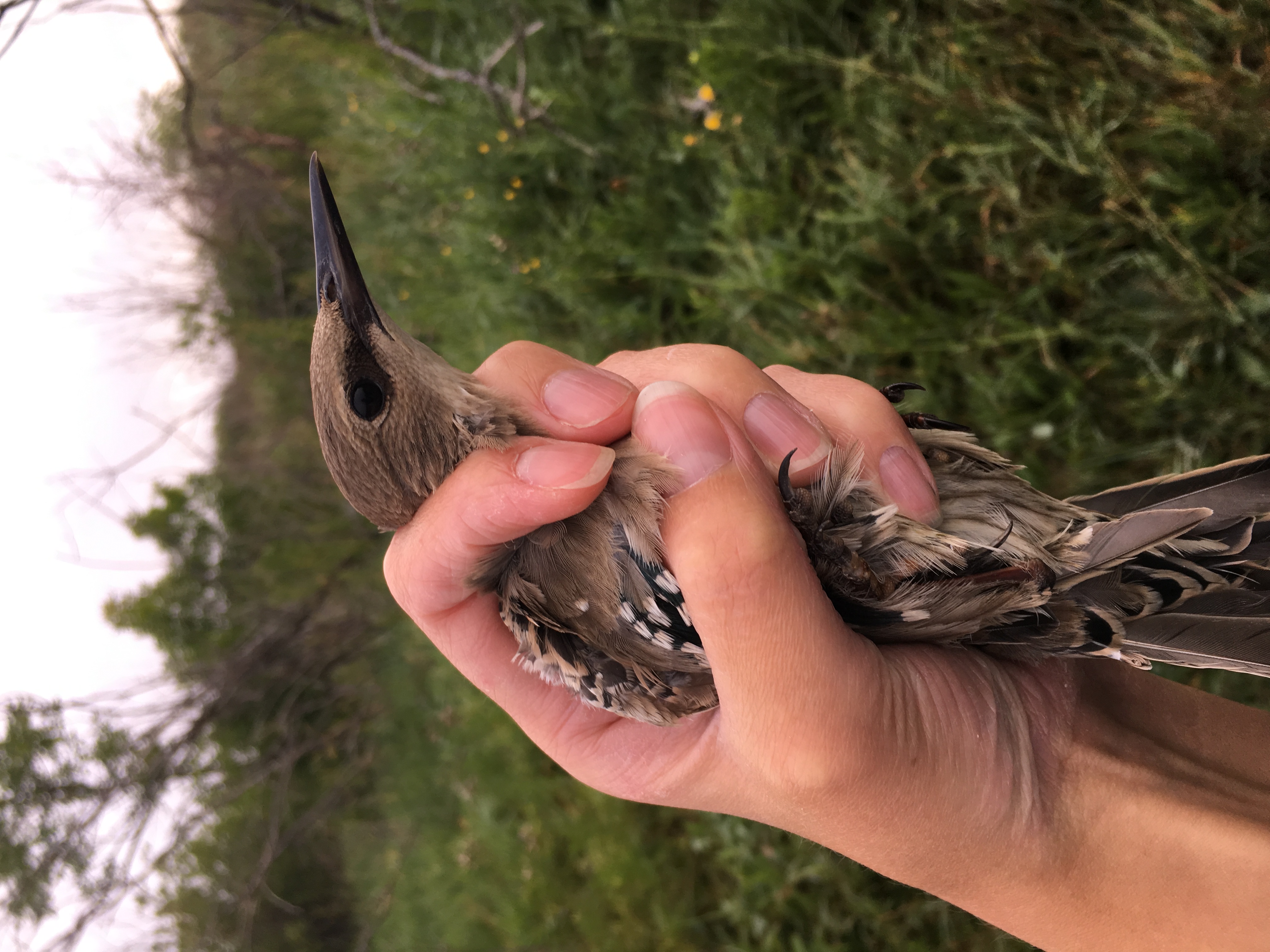
 There have been many highlights! It seems almost every day we have a new one. We have already been seeing non-resident warblers making their way south through the marsh. Some seem to be a tad early but that’s okay! We’ve already caught 7 Tennessee Warblers and hopefully we will see them through to September. Of course we have been catching Common Yellowthroats and Yellow Warblers (our resident warblers) Currently Yellow Warblers make up the majority of birds banded at 108.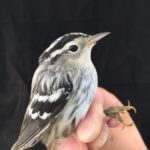
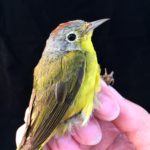 Kelsey was very excited about her first Black and White Warbler and Nashville Warblers banded in the past week.
 Some of our recent observations have been Sandhill Cranes, many American White Pelicans, Canada Geese have been moving around and making, Catbirds, Eastern Kingbirds, and tons of Wrens. There has also been a young Coyote that has greeted us a couple of mornings, many many toads, and we’ve been lucky enough to catch two Common Green Darners along with some other dragonflies.
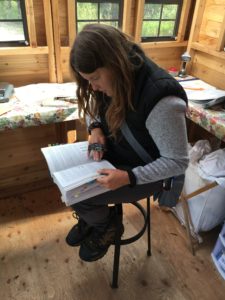
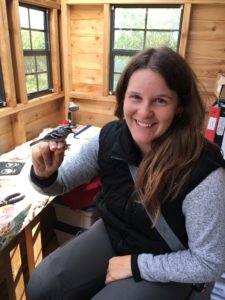 This year’s bander in charge is Kelsey Bell, one of our dedicated volunteers from the last two seasons. She also has banding experience from 3 field seasons banding Grassland birds in Montana and some time banding Fairy Wrens in Australia so she is bringing a ton of knowledge with her. Kelsey will be banding everyday from 30 minutes before sunrise for 6 hours. Weather permitting of course.
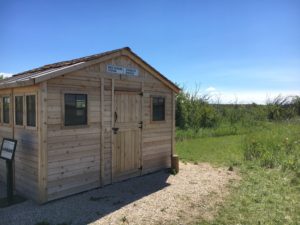 Our brand new banding hut is being put to the Fall Banding test and it is working out fabulously! We are hoping to raise funds towards electrifying the building to keep us (and the birds) warm on those chilly fall or spring mornings. Not only is the hut working well but it looks great too! We are so lucky and grateful to our volunteers that helped us build it.
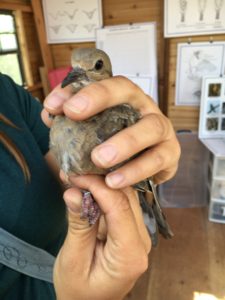 A big highlight from our first few days included the first ever Mourning Dove banded at DMBO! We’ve been waiting patiently for one of those doves to fly in and it finally happened. A couple other highlights include a Warbling Vireo, American Goldfinch, and Cedar Waxwings. Lucky for us there’s a Cedar Waxwing nest nearby so we will probably be able to get all those babies banded too.